
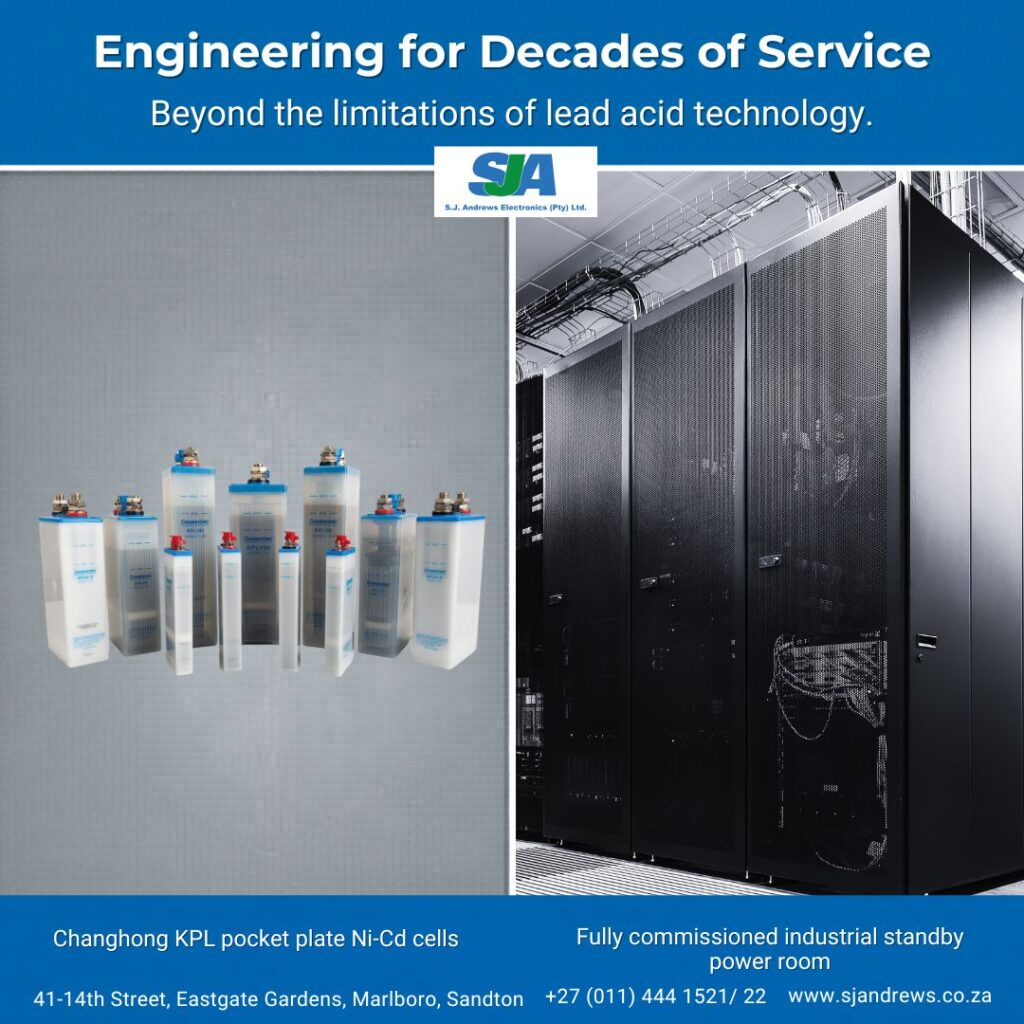
The South African energy landscape presents unique challenges for industrial operations. From frequent power outages to high ambient temperatures, the demand for resilient standby power has never been greater. For businesses requiring long duration discharge between one and one hundred hours, the Changhong KPL Ni-Cd Battery has emerged as the most reliable electrochemical technology available. Unlike traditional lead acid alternatives, this battery is designed to survive the harsh environmental and electrical stressors common in local industries.
The Engineering Excellence of the Changhong KPL Ni-Cd Battery
The Changhong KPL Ni-Cd Battery is built using sophisticated pocket plate technology. In this design, the active materials are encapsulated within double perforated nickel-plated steel strips. This mechanical structure prevents the shedding of active material, which is the primary cause of “sudden death” in lead acid batteries. The alkaline electrolyte, consisting of potassium hydroxide and lithium hydroxide, does not participate in the chemical reaction in a way that degrades the plates. This allows the battery to maintain a stable electrolyte density and provide a service life typically exceeding twenty years in stationary applications.
Because the structural components are made of steel rather than lead, the Changhong KPL Ni-Cd Battery is immune to sulphation. It can be left in a partially discharged state for extended periods without permanent loss of capacity. This makes it ideally suited for South African conditions where power outages often occur in rapid succession, leaving little time for a full recharge. Furthermore, the use of translucent polypropylene cases allows for immediate visual inspection of electrolyte levels, simplifying the management of large battery banks.
Industrial Applications for the Changhong KPL Ni-Cd Battery in South Africa
The Changhong KPL Ni-Cd Battery is widely utilised across critical sectors where reliability is non-negotiable. In the railway industry, these batteries power essential signalling equipment and level crossing gates. They are tested to the IEC 60623 standard, ensuring they can withstand the constant vibrations and mechanical shocks associated with trackside environments. Their ability to operate in temperatures ranging from -40 to +60 degrees Celsius ensures that rail networks remain functional even in the extreme heat of the Northern Cape or the cold of the Drakensberg.
In the telecommunications sector, the Changhong KPL Ni-Cd Battery is the preferred choice for remote rural base stations. Many of these sites rely on hybrid solar systems where the battery must support the load through long nights and cloudy days. Because these batteries do not require air conditioning to maintain their lifespan, operators can significantly reduce their site electricity consumption and maintenance costs. The robust nature of the KPL series also makes it suitable for mining operations, where it provides emergency backup for underground lighting, ventilation monitoring, and refuge chambers.

Professional Maintenance of the Changhong KPL Ni-Cd Battery
To ensure that the Changhong KPL Ni-Cd Battery achieves its full design life, following specific maintenance protocols is essential. Commissioning is the most critical stage; a new battery should undergo a constant current charge at 0.2C5A for eight to twelve hours to activate the chemistry. It is vital to use only high purity distilled or deionised water for topping up. Using tap water will introduce minerals that poison the alkaline electrolyte, leading to high self-discharge and reduced performance.
Routine inspections should include checking terminal connection torques, which should be maintained at 50 Nm for M20 terminals to prevent hotspots. Cleaning the flame arresting vents with hot water is also recommended to remove any carbonate crusts that might block gas dissipation.

Environmental Compliance for the Changhong KPL Ni-Cd Battery
Operating the Changhong KPL Ni-Cd Battery in South Africa requires adherence to the National Environmental Management: Waste Act. Since August 2021, a total ban on landfilling battery waste has been in effect. As an industrial user, you must ensure that your spent cells are processed through authorised recycling channels. Organisations like (https://www.reclite.co.za/) provide local facilities to recover cadmium and nickel, ensuring your business remains compliant with Extended Producer Responsibility regulations.
Choosing a long-life battery is a sustainable decision. By selecting a twenty-year technology over a five-year lead acid equivalent, you reduce the volume of hazardous waste generated by your facility by seventy-five per cent over two decades. This significantly lowers the administrative burden of tracking waste streams and helps your company meet its sustainability targets.

Get Expert Support for Your Changhong KPL Ni-Cd Battery Installation
Investing in the right energy storage is a strategic decision that protects your operational continuity. As the sole distributor for these systems in South Africa, S.J. Andrews provides the technical expertise required to size, install, and maintain your power infrastructure. We invite you to Contact Us to discuss your specific requirements or to arrange a technical audit of your existing standby systems.
Our team is ready to provide you with detailed quotations and engineering support to ensure your business remains resilient. Reach out today to secure your power supply with the most durable technology on the market.